
Premises liability claims arise when a person is injured because of a dangerous or unsafe condition on property controlled by someone else. But not every injury on someone else's property leads to a valid claim, and the type of claim you have changes everything.
The category matters because it affects what evidence you need, who might be responsible, which insurance policy applies, and how a court evaluates the legal arguments. A slip-and-fall claim looks different from a negligent security case, and both differ from a dog bite or pool accident.
This article breaks down the major types of premises liability claims, explains the basic negligence framework behind them, and walks through practical steps to take after an injury. Florida law drives most of the specifics here, and getting state-specific advice matters more than most people realize.
Key Takeaways
- Premises liability covers slip-and-falls, negligent security, dog bites, pool injuries, and falling objects
- Injury on someone else's property alone does not prove liability; you still need duty, negligence, causation, and damages
- Photos, incident reports, witnesses, medical records, and surveillance often decide these cases
- Florida law treats visitor status, comparative fault, filing deadlines, and government claims differently from other states
- Seek a timely case review before evidence disappears or a filing deadline passes
What Is a Premises Liability Claim?
Premises liability covers injuries or property damage caused by an unsafe condition, activity, or security failure on property owned, occupied, leased, managed, or controlled by another party. That property could be a grocery store, an apartment complex, a hotel, a parking garage, or a private residence.
Depending on who controlled the hazard, potential defendants might include:
- Property owners and landlords
- Business tenants and operators
- Property management companies
- Maintenance or repair contractors
- Security companies
- Government entities (for public property)
The basic claim framework has four parts:
- Identify the hazard on the property
- Establish that the defendant owed a duty of care
- Show a breach of that duty (creating the hazard, failing to inspect, or failing to warn)
- Connect that breach to your injury and damages

Why Visitor Status Matters
Florida law treats visitors differently depending on why they were on the property. The Florida Bar groups visitors into categories that change the duty owed:
- Business invitees and invited social guests — generally a duty to keep the premises reasonably safe
- Uninvited licensees — a much narrower duty
- Trespassers — an even more limited duty, with exceptions for known dangers and situations involving children
Your status can decide whether you can bring a claim at all, so confirming it under Florida law is a critical first step.
Premises Liability vs. Slip-and-Fall
People often use these terms interchangeably, but they're not the same thing. A slip or trip is an accident mechanism. Premises liability is the broader legal theory that can also cover assaults, dog attacks, structural collapses, toxic exposure, and fires.
Getting this distinction right helps identify the correct insurer, preserve the right evidence, and figure out whether more than one party contributed to your injury.
Types of Premises Liability Claims
These categories aren't neat boxes. One incident often involves more than one hazard, more than one responsible party, or overlapping legal theories. The specific facts of your case, not a label, determine whether a claim exists.
Slip-and-Fall and Trip-and-Fall Claims
These are the most familiar premises liability cases, and they arise from hazards like:
- Spilled liquids or wet floors
- Ice or water accumulation
- Uneven pavement and potholes
- Broken flooring or unsecured rugs
- Debris, exposed cords, or defective stairs
- Missing handrails
These show up constantly in stores, restaurants, apartment complexes, hotels, sidewalks, and parking lots. For a transitory substance in a Florida business, state law requires proof that the business had actual or constructive knowledge of the hazard and failed to remedy it.
Constructive knowledge can be shown by proving the hazard existed long enough that reasonable inspection should have caught it, or that it was part of a recurring, foreseeable pattern.
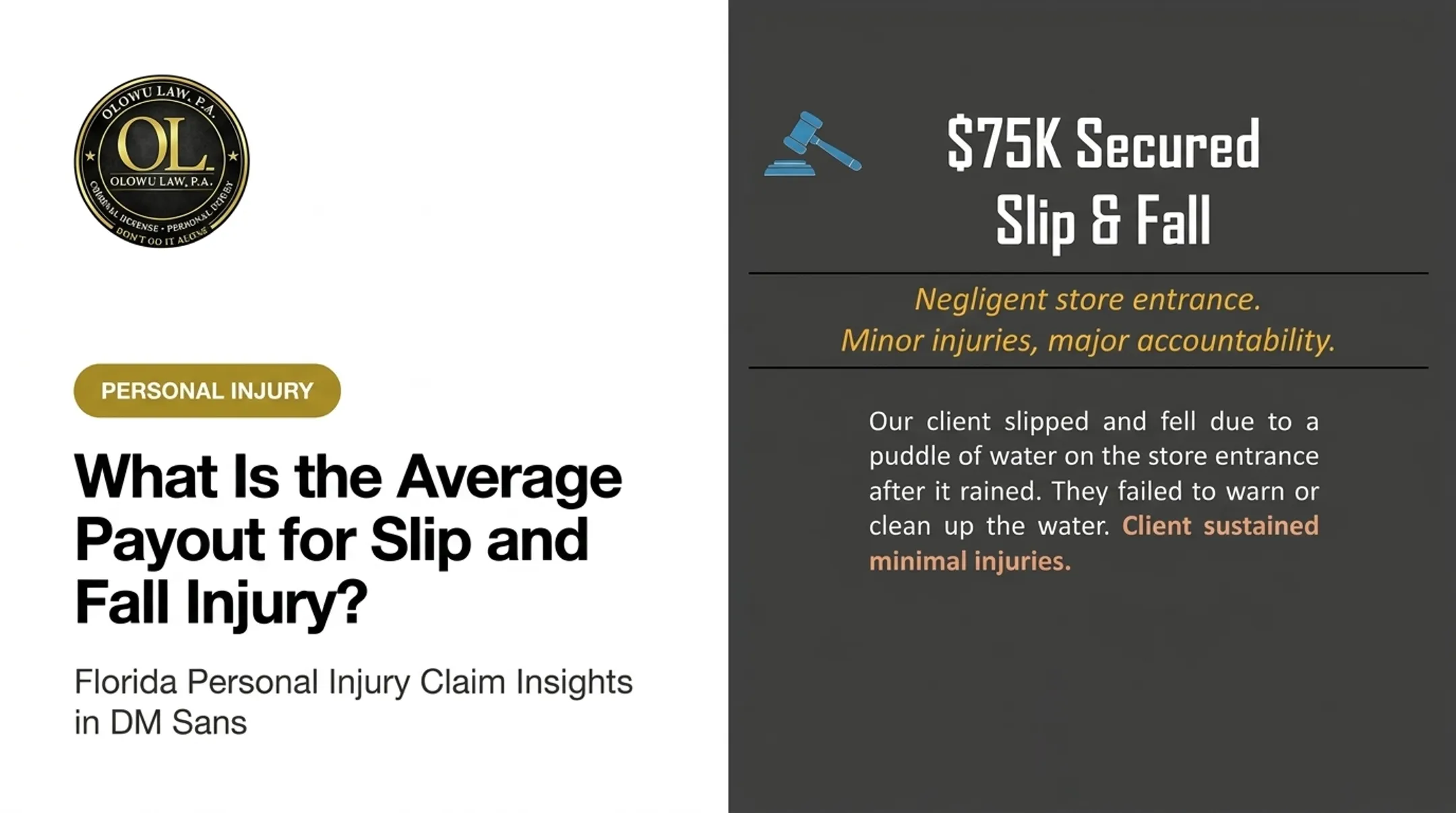
One Olowu Law case involved liquid near a store entrance that hadn't been cleaned or marked, resulting in a $75,000 recovery. Another, involving a known spill and inadequate cleanup procedures, resulted in $250,000. Comparative-fault arguments often come up here too, since the property owner may argue the hazard was obvious or that you weren't paying attention.

Inadequate Maintenance and Structural or Equipment Hazards
This category covers physical failures in the building itself:
- Deteriorated buildings, ceilings, or roof collapses
- Defective balconies and broken railings
- Unsafe stairways
- Elevator or escalator malfunctions
- Inadequate lighting and electrical hazards
- Fire-code violations
- Falling merchandise or construction materials
Florida requires annual inspections of covered elevators and conveyances by a certified inspector, but an inspection requirement alone doesn't prove liability in a specific case. Maintenance records, repair requests, code-compliance documents, and expert opinions typically establish whether the property controller knew about the defect and had time to fix it.
Negligent Security and Criminal-Activity Claims
When someone gets assaulted, robbed, or otherwise harmed by a third party's criminal act, the property owner may bear responsibility if security failures contributed to a foreseeable risk. Common contributing factors include:
- Inadequate lighting
- Broken locks or unsecured entrances
- Missing security cameras
- Absent security guards
- Poor access controls
These claims frequently arise at apartment complexes, hotels, shopping centers, parking garages, nightclubs, and hospitals. Foreseeability is where these cases get complicated.
Florida appellate courts don't agree on how similar, recent, or geographically close prior crimes need to be before they count as evidence of foreseeability. Prior incidents, property layout, and security policies all become important evidence, but foreseeability alone doesn't establish that better precautions would have stopped the attack.
One Olowu Law result involved a $125,000 settlement built on evidence of prior similar incidents and missing security measures.
Animal, Pool, Environmental, and Other Specialized Claims
This category covers a wide range of hazards:
- Dog bites and animal attacks
- Swimming pool and drowning incidents
- Toxic exposure to mold, asbestos, lead, or chemicals
- Injuries from fires, explosions, or unsafe recreational equipment
Florida applies a strict-liability rule to most dog bite cases: the owner can be liable regardless of whether the dog showed prior signs of aggression. This rule generally doesn't apply if the injured person was trespassing or provoked the animal, and a prominently displayed "Bad Dog" sign can serve as a defense.
Some of these incidents overlap with entirely separate legal theories, including product liability, medical negligence, workers' compensation, or government liability. A legal review helps identify every potentially responsible party rather than assuming only one applies.
How to Tell Which Claim May Apply and What to Do Next
Figuring out your claim type starts with the event itself. Document:
- Where the injury occurred
- What hazard or conduct caused it
- When it was discovered
- Whether anyone warned about it or tried to fix it
Next, identify who actually controlled the property. Ownership alone doesn't answer this question. Depending on the arrangement, responsibility may fall on a landlord, tenant, property manager, maintenance contractor, security company, or government body.
Evidence to Preserve Immediately
Conditions change fast, and so does the evidence connected to them. Try to gather:
- Photos and video of the hazard and surrounding area, taken as soon as possible
- Witness contact information before people scatter or forget details
- Incident or complaint reports filed with the property or business
- Proof of presence, such as receipts, reservation confirmations, or entry records
- Clothing or footwear you were wearing at the time of the injury
- Medical records and bills documenting your treatment
- Written communications with the property owner or their insurer
Surveillance footage often gets deleted on a routine schedule, and repairs made after an incident can erase physical evidence of the hazard. Witness memories fade too, and legal deadlines don't wait.

Olowu Law moves quickly to request store camera footage before it's overwritten, since delays here can permanently weaken a case.
Documenting Your Damages
You'll typically need records that cover:
- Emergency care and ongoing treatment
- Projected future medical needs
- Lost income and reduced earning capacity
- Property damage
- Pain or emotional harm tied to the injury
Thorough documentation won't decide the claim by itself, but it gives you a stronger foundation to pursue it.
If you've been injured on someone else's property, a free, no-pressure case review can help you understand your situation, what evidence you already have, and what steps make sense next.
How to Evaluate a Potential Premises Liability Claim
Before assuming you have a case, work through these core questions:
- Was there a dangerous condition or security risk?
- Did the property controller owe you a duty of care?
- Did they know, or should they have reasonably known, about the risk?
- Did they have a reasonable opportunity to fix it or warn you?
- Did the condition actually cause your injury?
Common Defenses
Property owners and their insurers rarely concede fault outright. Expect arguments like these:
| Defense | What It Argues |
|---|---|
| Open-and-obvious condition | The hazard was visible enough that a warning wasn't necessary |
| Lack of notice | The owner didn't know and couldn't reasonably have known about the hazard |
| Reasonable inspections | The owner followed adequate inspection or repair practices |
| Comparative negligence | Your own conduct contributed to the injury |
| Trespasser status | You didn't have a legal right to be on the property |
Florida's comparative fault rule bars recovery entirely if a claimant is found more than 50% at fault for their own injury.

An "obvious" hazard defense still doesn't automatically end a case. A 2025 Florida Third District Court of Appeal decision reversed summary judgment for a hotel, finding that even an allegedly obvious condition didn't eliminate the separate duty to maintain reasonably safe premises.
A strong claim needs more than proof that an injury happened on the property. It requires evidence tying the defendant's specific conduct or omission to your injury, plus documented damages.
Professional help becomes especially important when:
- Injuries are serious
- Responsibility is disputed
- Surveillance is missing
- A government entity owns the property
- An insurer has already denied the claim
What to Check Before Pursuing a Claim
A few mistakes can sink an otherwise solid claim:
- Familiar labels don't prove liability. "Slip and fall" doesn't automatically mean someone else did something wrong. Identify the exact hazard, who controlled it, and what evidence shows negligence.
- Document the scene right away. Delays in reporting the incident, requesting surveillance preservation, or seeking medical care create evidentiary and deadline problems that are hard to fix later.
- Hold off on settlements and fault statements. Wait until you understand your injury's full impact, and have any significant insurance communications reviewed before responding.
- Confirm the law where the incident happened. Deadlines, visitor-duty standards, and insurance requirements vary by state, so another state's rules may not apply.
Those state-specific rules matter in Florida. The general negligence filing deadline currently stands at two years from the date of injury, following a 2023 law that shortened the previous four-year window. Claims against a government entity carry a separate written-presentment requirement, generally within three years. Missing either deadline can end a claim regardless of its merits.

Conclusion
Premises liability is a broad category. Slip-and-fall claims get the most attention, but negligent security, structural defects, dog bites, and pool accidents all fall under the same legal umbrella, each with its own proof requirements and challenges.
Liability generally comes down to duty, notice, unreasonable conduct or omissions, causation, damages, and your own conduct under Florida law. Those elements turn on evidence, timing, and an honest evaluation of the facts.
If you were injured on someone else's property, preserve what evidence you can and seek a timely legal evaluation before deciding how to proceed. Olowu Law, led by former prosecutor and civil defense attorney Michael Olowu, offers free case reviews for Florida residents facing premises liability claims.
Frequently Asked Questions
What is a premises liability case?
It's an injury or property-damage claim involving a dangerous condition, negligent maintenance, inadequate security, or another hazard on property controlled by someone else. The specific requirements depend on state law.
What are some examples of premises liability cases?
Common examples include slip-and-fall, trip-and-fall, negligent security, dog bites, pool incidents, falling objects, structural failures, elevator accidents, toxic exposure, and fire or electrical hazards.
How long does a premises liability lawsuit take?
Timing depends on injury severity, available evidence, settlement negotiations, court schedules, and whether the case goes to trial. This general timeline is different from the filing deadline, which is a hard cutoff.
Are premises liability cases hard to win?
Outcomes depend on proving duty, notice, breach, causation, damages, and comparative fault. An injury on someone else's property isn't enough on its own. You need evidence connecting their conduct to your harm.
What's the difference between general liability and premises liability?
General liability is broad insurance businesses carry for third-party claims. Premises liability is the claim type based on unsafe property conditions. Whether a policy covers a given incident depends on its language and the facts.
What does premises liability insurance cover in Florida?
It may cover qualifying third-party injuries or property damage from premises-related negligence. Policy language, exclusions, limits, and Florida law control the outcome. No policy guarantees payment for every incident.